
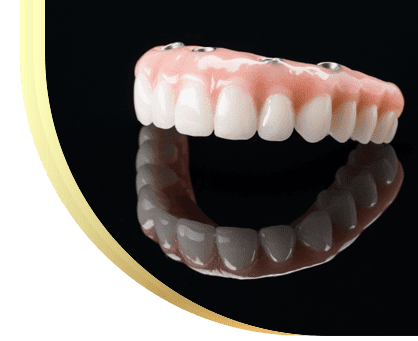

Single implant restorations replace one missing tooth with an implant-supported crown. The implant integrates within alveolar bone and supports a single-unit prosthesis. Surrounding natural dentition guides esthetics, occlusion, and contact design.
Clinicians indicate single implant restorations when one tooth is absent and adjacent teeth remain intact. This approach preserves enamel and avoids preparation of neighboring teeth. Anterior cases prioritize esthetics and soft tissue harmony. Posterior cases prioritize load control and occlusal durability.
Cement-retained crowns suit cases with favorable implant angulation. They provide passive fit and esthetic occlusal surfaces without access holes.
Advantages include simplified laboratory workflow and improved esthetics.
Disadvantages include risk of residual cement. Subgingival cement remnants associate with peri-implant inflammation and bone loss. Careful cement control reduces biological complications.
Advantages
Disadvantages
Screw-retained crowns suit cases requiring retrievability and maintenance access. They eliminate cement-related risks.
Advantages include retrievability and predictable maintenance.
Screw access positioning influences occlusal design and esthetics. Proper torque application generates preload within the screw joint. Adequate preload maintains joint stability and reduces micromovement.
Advantages
Disadvantages
This combines the benefits of screw-retained and cement-retained implant crowns. It involves using a custom-designed abutment and a crown with a screw access hole. The custom abutment provides optimal emergence profile, support, and esthetics, while the crown is securely attached using a screw connection. This approach allows for easy access to the screw while offering enhanced emergence profile, functional support, and esthetics. The screwmentable implant crown provides a versatile solution, combining the advantages of both retention methods.
Retention design affects retrievability, maintenance, and biological stability. Selection depends on implant angulation, esthetic demand, and risk control.
A structured clinical workflow ensures accuracy from impression to delivery. Each phase controls fit, occlusion, and long-term stability. Precision at every step protects peri-implant tissue and mechanical integrity.
Digital design defines margin placement, emergence profile, and occlusal scheme. Software controls contour, contact strength, and material thickness.
Milling considerations influence marginal precision and surface integrity. Tool diameter, material density, and sintering protocol affect final adaptation. Proper calibration reduces internal misfit.
Passive fit verification confirms absence of strain at the implant–abutment interface. Visual inspection and tactile assessment detect misalignment.
Radiographic confirmation verifies complete seating of components. Periapical imaging ensures no gap at the connection.
Torque calibration secures the abutment or prosthetic screw to manufacturer-recommended values. Controlled torque establishes preload and stabilizes the screw joint.
Occlusion determines force direction, implant longevity, and prosthetic stability. Controlled load distribution protects the bone–implant interface and reduces mechanical complications. Functional harmony between natural teeth and the implant crown preserves long-term success.
Here are five essential principles that shape predictable implant occlusion and biomechanical stability.
Anterior guidance redirects excursive forces and reduces lateral stress on the implant crown
Controlled centric contacts and axial loading improve implant stability
Lateral forces and wide occlusal tables increase bending stress on the implant
Parafunction such as bruxism raises overload and screw loosening risk
Cantilever extensions amplify leverage forces and crestal bone strain
Mechanical and biological complications in single implant restorations influence long-term stability, peri-implant health, and prosthetic survival. Early recognition of these risks supports timely intervention and structured maintenance.
The main complications faced in single implant restorations are mentioned below.
Screw Loosening: Screw loosening occurs when preload decreases under functional or lateral forces, leading to micromovement at the implant–abutment interface and prosthetic instability.
Abutment Fracture: Abutment fracture develops from repetitive occlusal stress or material fatigue, especially when lateral forces concentrate strain at the implant connection.
Veneer Chipping: Veneer chipping affects layered ceramic crowns when occlusal overload or parafunctional activity creates surface fracture and material separation.
Cement-Induced Peri-Implantitis: Cement-induced peri-implantitis results from retained subgingival cement that triggers inflammation, pocket formation, and progressive crestal bone loss.
Peri-Implant Mucositis: Peri-implant mucositis presents as reversible soft tissue inflammation around the implant caused by plaque accumulation without supporting bone loss.
Peri-Implant Bone Loss: Peri-implant bone loss develops from biomechanical overload or bacterial infection, compromising implant support and long-term osseous stability.
Long-term evidence supports high survival and success rates for single implant restorations when biological and biomechanical principles guide treatment. Survival differs from success, as survival reflects implant presence while success reflects functional and tissue stability over time.
Five-year survival rates for single implant restorations frequently exceed 95% in systematic reviews. Studies published in Clinical Oral Implants Research report stable crestal bone levels and low complication rates when proper surgical and prosthetic protocols are followed.
Ten-year follow-up studies demonstrate survival rates above 90% for single implants in both anterior and posterior regions. Longitudinal data in The International Journal of Oral & Maxillofacial Implants show that maintenance compliance and controlled occlusion influence long-term stability.
Clinical success extends beyond survival and includes absence of pain, infection, mobility, and progressive bone loss. Radiographic stability, healthy peri-implant soft tissue, and controlled probing depths define measurable success criteria. Consistent recall and occlusal monitoring support sustained outcomes over time.
Dental clinics that aim to achieve these long-term outcomes require precision-driven laboratory support. Infinia Dental Lab designs single implant restorations with controlled emergence profiles, accurate occlusion, and digitally verified fit to protect biological and mechanical stability. Collaboration with Infinia Dental Lab strengthens case predictability and supports sustained implant success.